Shared inference capacity
Planned inference on SmartTec-owned GPU nodes shared by multiple customers. Scheduling, tenant controls, supported models and performance targets will be validated before service.
Workload planner / From requirements to proposal
Start with the application and the service your customers need. We turn that brief into a workload validation plan, hardware configuration and commercial proposal, with a clear path through procurement and commissioning.
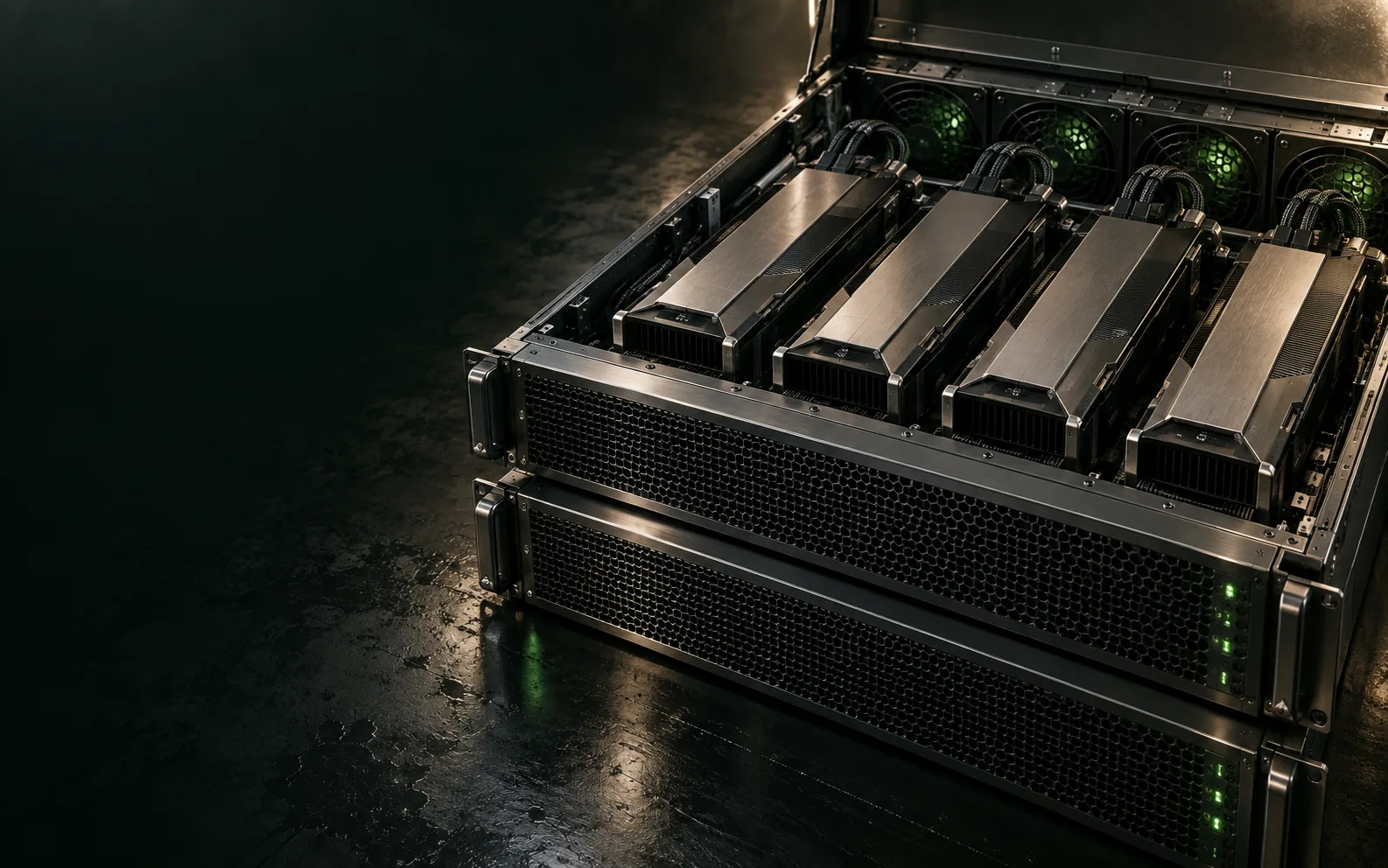
AI hardware concept · Not installed inventory or an OEM configuration drawing.
Prepare your model, tenancy, storage and service requirements below.
Define the hardware ownership, deployment and support responsibilities for a proposal.
Confirm feasibility and throughput with a representative workload benchmark.
AI hardware concept · Not installed inventory or an OEM configuration drawing.
Choose a topic, or open the 3D model.
Illustrative hall only. The workload guide prepares requirements for a deployment review; equipment shown does not establish inventory or performance.
01Choose the service
Planned inference on SmartTec-owned GPU nodes shared by multiple customers. Scheduling, tenant controls, supported models and performance targets will be validated before service.
Planned SmartTec-owned GPU servers for one tenant per node. The proposal will define isolation, GPU allocation, software access and support.
Planned space, power, cooling and connectivity for servers you own, subject to a separate equipment and facility allocation review.
Shared inference and dedicated GPU servers use different scheduling and isolation designs. Tell us whether you need shared inference or a dedicated single-tenant node on SmartTec-owned hardware, or colocation for your own equipment.
02Prepare the brief
03Validate before deployment
Memory capacity alone does not determine throughput or service quality. A representative workload test will establish the supported configuration, scheduling approach and performance envelope. Electrical and cooling review must then confirm that the facility can support it.
The current proposal is 64 B300 GPUs in 8 complete Supermicro systems. The 60 modeled saleable GPUs and four held back are a financial allocation, not a complete standby node or a validated tenant layout. Customer discussions remain unsigned and procurement is ahead.
04Start a conversation
Share the requirements you know, and we can work through the rest together. Detailed project economics and their assumptions are available separately in the protected investor area.